Why Malawi
From Local Context to Global Impact
Epidemiological and operational research conducted in rural Malawi can inform health programs and policy nationally and regionally.
We urgently need to better understand the dual infectious and non-communicable disease burdens developing in the global South from a multidisciplinary perspective, to develop innovative evidence-based responses, and to employ rigorous research methods demonstrating feasibility and scalability of interventions in an already strained health system.
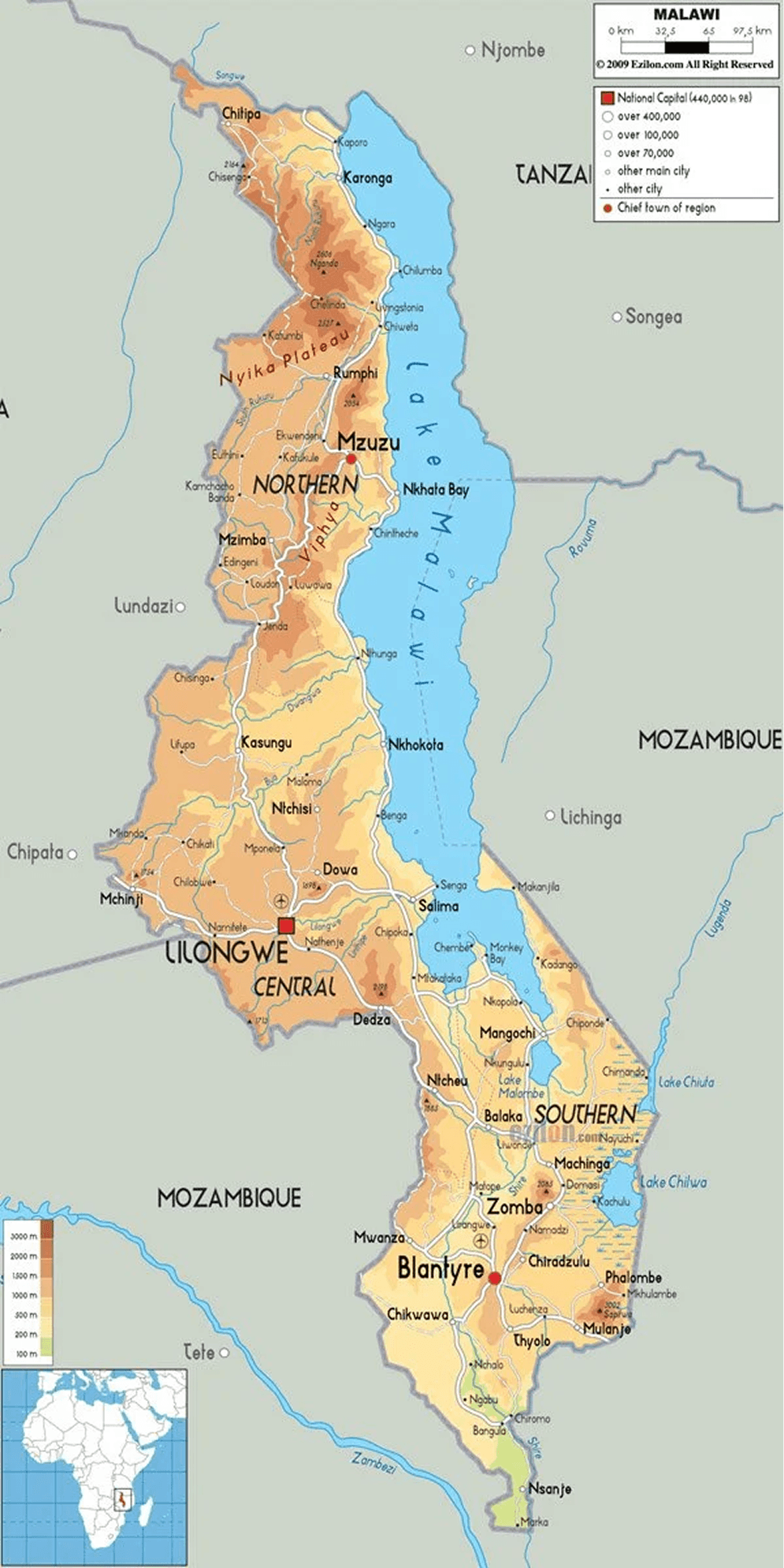
Population pressure, climate change, food insecurity, and access to clean water are inextricably linked to each other and to population health, and Malawi is simultaneously impacted by all of these. This scenario of colliding crises, epitomised in the central region lakeshore communities of Salima District, is played out across sub-Saharan Africa.
| Health at a glance | Salima | Malawi |
|---|---|---|
| <5’s with fever in last 2 weeks | 32% | 29% |
| <5’s below −2SD height-for-age | 35% | 37% |
| <5’s with anemia (<11g/dl) | 72% | 63% |
| Women with BMI <18.5 | 17% | 14% |
| Women with BMI ≥30 | 29% | 41% |
| Adult hypertension | unk. | 33% |
| Diabetes prevalence | unk. | 5.6% |
| HIV Prevalence | 3% | 9% |
| Plasmodium parasitemia | 87% | 24% |
| Circulating filarial antigen | >20% | ~10% |
| Schistosomiasis in children | ~90% | ~30% |